
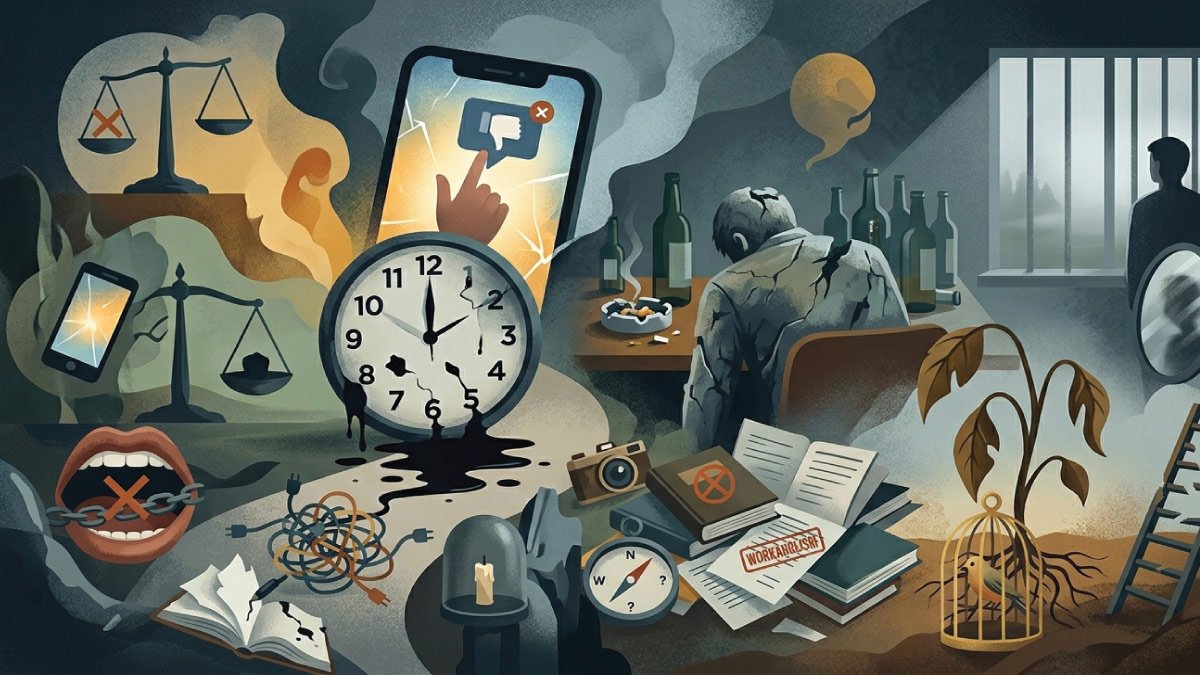
Mental health is a delicate ecosystem. Just as tiny leaks can sink a ship over time, small habits, when repeated daily, can gradually erode your mental well-being. Many of these habits are subtle, almost invisible, yet they have profound long-term effects. From personal experience, I’ve learned that recognizing and addressing these behaviors early can transform your life. Here are 28 habits that quietly sabotage your mental health—and ways to start reversing them.
1. Chronic Negative Self-Talk
Chronic negative self-talk is more than just thinking critically about yourself—it’s a persistent inner dialogue that undermines confidence and fuels anxiety. I used to constantly criticize my performance at work, believing it would push me to improve. Instead, it left me feeling drained and doubtful of my abilities. Recognizing these patterns is the first step toward change.
By consciously catching negative thoughts, you can reframe them into positive, growth-oriented statements. For example, replacing “I always mess up” with “I can learn from my mistakes” shifts your mindset toward improvement and self-compassion.
Key Points to Combat Negative Self-Talk
Identify recurring negative thoughts.
Challenge the validity of self-critical statements.
Replace criticism with constructive alternatives.
Practice daily positive affirmations.
Celebrate small achievements to build confidence.
| Strategies to Reframe Self-Talk | Examples |
|---|---|
| Catch negative statements | “I always fail” → “I can improve next time” |
| Reframe into positive action | “I’m not good at this” → “I’m learning to get better” |
| Practice gratitude | Focus on strengths and accomplishments |
| Seek support | Talk to friends, mentors, or counselors |
Personally, implementing these strategies changed how I approached challenges. Instead of dreading mistakes, I began seeing them as opportunities to learn, which improved both my work performance and mental well-being.
2. Social Media Overload
Social media can be a double-edged sword. While it connects us, endless scrolling often distorts reality and triggers unhealthy comparisons. I once spent hours on Instagram, comparing my life to curated feeds, which left me feeling inadequate and stressed. Recognizing the negative impact is the first step to regaining control.
Setting boundaries and curating your feed are effective strategies. By following uplifting accounts and limiting screen time, you can enjoy social media without letting it affect your self-esteem. Small, intentional changes make a big difference.
Key Points to Reduce Social Media Overload
Set daily time limits for social media.
Unfollow accounts that trigger negative feelings.
Engage with positive and educational content.
Take regular digital detox breaks.
Focus on real-life connections over online validation.
| Strategies to Control Social Media | Examples |
|---|---|
| Limit screen time | Use apps or phone settings to cap daily usage |
| Curate your feed | Follow motivational, educational, or creative accounts |
| Schedule digital breaks | Avoid scrolling during meals or before bedtime |
| Focus on real-life interactions | Spend more time with friends or family offline |
Personally, applying these changes helped me feel less anxious and more present. I now enjoy social media as a tool for learning and inspiration rather than comparison, which improved my overall mental well-being.
3. Neglecting Sleep
Sleep is essential for mental and physical well-being, yet many of us underestimate its importance. During college, I routinely slept only 4–5 hours a night, believing it would make me more productive. In reality, I experienced chronic irritability, poor concentration, and heightened stress. Recognizing the consequences of sleep deprivation is key to making lasting changes.
Prioritizing rest means creating a consistent bedtime routine and a calming sleep environment. Small adjustments, like reducing screen time before bed, can significantly improve energy, focus, and overall mood.
Key Points to Improve Sleep
Maintain a consistent sleep schedule.
Create a relaxing pre-bedtime routine.
Limit caffeine and heavy meals before bed.
Keep your sleep environment dark and quiet.
Avoid screens at least an hour before sleeping.
| Strategies for Better Sleep | Examples |
|---|---|
| Consistent sleep schedule | Go to bed and wake up at the same time daily |
| Relaxing bedtime routine | Read, meditate, or listen to calm music |
| Screen-free time before bed | Avoid phone or laptop 1 hour before sleep |
| Optimize sleep environment | Use blackout curtains, cool room temperature |
| Limit stimulants | Avoid caffeine or energy drinks in the evening |
Personal Experience
prioritizing sleep transformed my productivity and mood. I became more focused during the day, less irritable, and better able to manage stress, proving that sleep is a vital investment in overall well-being.
4. Skipping Physical Activity
Exercise benefits both body and mind, yet it’s easy to neglect during busy schedules. I went through months of sedentary workdays and noticed my mood plummet, energy decline, and focus wane. Realizing that movement impacts mental well-being motivated me to make small but consistent changes.
Incorporating even brief daily activity can improve mood, reduce stress, and enhance mental clarity. Simple actions, like a 20-minute walk or stretching break, can transform your energy levels and overall mindset.
Key Points to Stay Active
Schedule daily movement, even short sessions.
Mix cardio, strength, and stretching exercises.
Use walking breaks during work hours.
Exercise outdoors for added mental benefits.
Track progress to stay motivated.
| Strategies to Maintain Physical Activity | Examples |
|---|---|
| Short daily workouts | 20–30 min walk or quick home exercises |
| Integrate movement into routine | Take stairs, stand while working, stretch breaks |
| Outdoor exercise | Walk, jog, or cycle outside for fresh air |
| Combine strength & cardio | Bodyweight exercises, yoga, or light weights |
| Track and celebrate progress | Use apps, journals, or wearable trackers |
Personal Experience,
Adding consistent movement drastically improved my mood and focus. Even small amounts of daily activity made me feel more energized, motivated, and mentally clear throughout the day.
5. Ignoring Emotional Needs
Ignoring emotions can create internal tension and anxiety. I once avoided expressing my feelings to appear strong, but this only intensified stress and self-doubt. Recognizing and acknowledging emotions is essential for mental health and overall well-being.
Practical strategies like journaling, therapy, or open conversations with trusted friends can release emotional burdens and foster self-awareness. By validating your own feelings, you build resilience and improve your relationships with others.
Key Points to Support Emotional Well-Being
Acknowledge your emotions without judgment.
Use journaling to express thoughts and feelings.
Seek therapy or counseling when needed.
Share feelings with trusted friends or family.
Practice self-compassion regularly.
Personal Experience,
acknowledging and expressing my emotions reduced anxiety and helped me feel lighter and more in control. Over time, I noticed stronger relationships and greater mental clarity by honoring my emotional needs.
6. Overworking Without Breaks
Modern culture often glorifies workaholism, but excessive work silently drains mental and physical energy. I experienced burnout after months of late nights and skipped weekends, leaving me exhausted, stressed, and unmotivated. Recognizing the need for balance is essential for long-term productivity and well-being.
Scheduling regular breaks, taking vacations, and dedicating time to hobbies helps recharge your mind and body. Prioritizing rest alongside work ensures better focus, creativity, and overall satisfaction.
Key Points to Avoid Burnout
Take short breaks during work hours.
Plan weekly downtime or hobbies.
Schedule vacations or long breaks periodically.
Set boundaries between work and personal life.
Listen to your body and mind for signs of fatigue.
| Strategies to Maintain Work-Life Balance | Examples |
|---|---|
| Short daily breaks | Stand up, stretch, or take a 10–15 min walk |
| Dedicate time to hobbies | Reading, painting, or sports activities |
| Plan vacations | Regular time off to rest and recharge |
| Set work boundaries | Avoid answering emails after work hours |
| Monitor mental and physical health | Track stress levels and adjust workload |
Personal Experience,
Implementing these strategies prevented burnout and improved my productivity. Taking intentional breaks and scheduling downtime made me more energized, focused, and motivated both at work and in personal life.
7. Chronic People-Pleasing
Many of us fall into the habit of constantly trying to make others happy. Chronic people-pleasing can feel rewarding at first, but it often drains energy and impacts mental health. Over time, saying “yes” to everything leaves little room for self-care or personal priorities.
I often found myself overwhelmed, taking on tasks I didn’t truly want. This led to frustration and exhaustion, making me realize the importance of setting boundaries. Learning to say “no” respectfully became a turning point for my well-being.
Key Impacts of People-Pleasing:
| Impact Area | Effect on Well-being | Personal Reflection |
|---|---|---|
| Stress Levels | Increases due to overcommitment | Felt exhausted trying to please everyone |
| Time Management | Reduced personal time | Neglected hobbies and self-care |
| Mental Health | Leads to resentment and burnout | Realized saying “no” improves peace of mind |
| Relationships | Can create imbalance or dependence | Boundaries strengthened healthy connections |
Strategies to Overcome People-Pleasing:
Practice saying “no” politely but firmly.
Prioritize your needs before commitments.
Reflect on why you seek approval from others.
Recognize that it’s okay to disappoint sometimes.
Celebrate small victories in setting boundaries.
By focusing on myself first, I now approach relationships and work with more clarity and energy, rather than feeling constantly drained.
8. Substance Dependence
Many people turn to alcohol, drugs, or even caffeine to cope with stress. While these substances may provide temporary relief, they often worsen anxiety and depression over time.
I personally relied on late-night drinks to relax after a long day. At first, it seemed helpful, but soon I noticed increased mood swings and restless nights. Recognizing the cycle was difficult, but adopting healthier coping strategies like meditation and light exercise gradually improved my mental clarity and emotional stability.
Key Effects of Substance Dependence:
| Substance Type | Short-Term Effect | Long-Term Effect |
|---|---|---|
| Alcohol | Temporary relaxation | Mood swings, anxiety, poor sleep |
| Drugs | Stress masking | Dependency, depression, health issues |
| Caffeine | Increased alertness | Anxiety, insomnia, jitteriness |
| Combined Use | Brief stress relief | Worsened mental health and fatigue |
Healthier Coping Strategies:
Try meditation or deep breathing exercises.
Engage in light physical activity or yoga.
Maintain a balanced sleep schedule.
Limit or monitor substance intake.
Seek support from friends or professionals when needed.
By replacing substances with healthier routines, I noticed a significant improvement in mood, energy, and overall well-being.
9. Constant Multitasking
Multitasking can seem like a way to get more done, but it often overwhelms the brain. Attempting to handle several tasks at once can lead to mental fatigue and decreased productivity.
I frequently tried juggling emails, calls, and tasks simultaneously. Instead of feeling accomplished, I ended the day drained and stressed. Shifting my approach to focus on one task at a time significantly improved my efficiency and reduced my anxiety.
Key Impacts of Multitasking:
| Aspect | Effect on Performance | Personal Reflection |
|---|---|---|
| Productivity | Decreases due to divided focus | Tasks took longer and felt chaotic |
| Stress Levels | Increases with mental overload | Felt exhausted by midday |
| Accuracy | Errors more likely | Mistakes increased when switching tasks |
| Cognitive Fatigue | Rapid mental burnout | Needed longer breaks to recover |
Strategies to Reduce Multitasking:
Prioritize tasks by importance and deadline.
Focus on one task fully before moving to the next.
Use time blocks or “deep work” sessions.
Take short breaks to recharge your mind.
Limit notifications and distractions during work.
By concentrating on single tasks, I now accomplish more with less stress and feel mentally clearer at the end of the day.
10. Avoiding Professional Help
Many people believe they can handle mental health struggles on their own, but this approach often delays recovery. Ignoring professional guidance can prolong stress, anxiety, and other challenges.
For years, I avoided therapy, convinced I could “handle it myself.” Over time, my problems felt heavier, and I realized I needed expert support. Speaking to a professional provided practical tools, fresh perspectives, and coping strategies that dramatically improved my life and mental well-being.
Key Benefits of Seeking Professional Help:
| Area | Effect Without Help | Effect With Help |
|---|---|---|
| Coping Strategies | Limited, repetitive | Practical, personalized tools |
| Emotional Insight | Hard to identify root causes | Greater self-awareness and clarity |
| Stress Management | Persistent stress | Healthier, effective coping mechanisms |
| Progress Speed | Slow recovery | Faster, structured improvement |
Tips for Embracing Professional Help:
Acknowledge that needing help is normal, not a weakness.
Research therapists or counselors who fit your needs.
Commit to consistent sessions, even when uncomfortable.
Keep an open mind to new coping strategies.
Share progress and challenges honestly with your professional.
By seeking therapy, I learned healthier ways to navigate stress, regulate emotions, and build resilience—transforming both my mental and daily life.
11. Holding Grudges
Holding onto resentment can fuel chronic stress and negative thought patterns. When we replay past arguments or perceived wrongs, it keeps anger alive and drains emotional energy.
I used to dwell on conflicts for weeks, replaying every detail in my head. This constant rumination increased my stress and made it hard to focus on the present. Practicing forgiveness—not just toward others, but also for myself—helped me release that burden and feel lighter, calmer, and more at peace.
Effects of Holding Grudges:
| Area | Negative Effect | Personal Reflection |
|---|---|---|
| Mental Health | Increased stress and anxiety | Felt tense and restless for days |
| Relationships | Creates distance or tension | Arguments lingered and affected trust |
| Emotional Energy | Drains positivity | Hard to enjoy hobbies or relaxation |
| Focus & Productivity | Impaired concentration | Struggled to complete work effectively |
Strategies to Let Go of Grudges:
Practice empathy to understand the other perspective.
Reflect on what you can control versus what you cannot.
Forgive others, even if reconciliation isn’t possible.
Forgive yourself for past mistakes.
Focus on positive experiences and personal growth.
By learning to release grudges, I regained mental clarity, emotional balance, and a greater sense of inner peace.
12. Living Without Boundaries
Living without clear boundaries can invite burnout and stress. When work, family, or friends constantly intrude into personal time, it becomes difficult to recharge and maintain balance.
I often allowed interruptions during my personal hours, trying to accommodate everyone. Over time, this led to frustration, exhaustion, and a sense of being overwhelmed. Learning to define my limits and respectfully communicate them has been essential in protecting my mental and emotional well-being.
Consequences of Lacking Boundaries:
| Area | Negative Effect | Personal Reflection |
|---|---|---|
| Mental Health | Increased stress and fatigue | Felt drained and anxious |
| Work-Life Balance | Blurred separation | Personal time constantly interrupted |
| Relationships | Resentment or tension | Frustration arose when saying “no” felt hard |
| Productivity | Decreased focus | Tasks took longer due to constant interruptions |
Strategies to Establish Boundaries:
Clearly define personal and work time.
Communicate limits respectfully to others.
Prioritize self-care and downtime.
Use tools or reminders to minimize interruptions.
Reinforce boundaries consistently for long-term balance.
By setting boundaries, I now experience reduced stress, more energy, and healthier relationships, while maintaining control over my personal time.
13. Perfectionism
Striving for perfection may feel motivating, but it often leads to chronic dissatisfaction and stress. Constantly chasing flawless results can drain energy and hinder progress.
I spent years obsessing over minor details, endlessly editing projects until I was exhausted and frustrated. Over time, I realized that aiming for “good enough” allowed me to complete tasks efficiently, reduce stress, and actually enjoy the process instead of being trapped in constant self-criticism.
Impacts of Perfectionism:
| Area | Negative Effect | Personal Reflection |
|---|---|---|
| Mental Health | Increased anxiety and frustration | Felt mentally exhausted after tasks |
| Productivity | Reduced due to over-editing | Projects took far longer than necessary |
| Creativity | Limited by fear of mistakes | Hesitated to try new ideas |
| Self-Esteem | Constant self-criticism | Rarely felt satisfied with accomplishments |
Strategies to Overcome Perfectionism:
Set realistic goals instead of flawless ones.
Celebrate progress, not just outcomes.
Allow yourself to make mistakes and learn from them.
Prioritize completion over endless refinement.
Practice self-compassion and positive self-talk.
By embracing “good enough,” I improved productivity, mental well-being, and enjoyment in both work and personal projects, freeing myself from the pressure of perfection.
14. Overconsumption of News
Constant exposure to negative news can heighten anxiety and create feelings of hopelessness. While staying informed is important, excessive consumption often overwhelms the mind.
I once spent entire evenings doomscrolling during global crises, which left me feeling powerless, anxious, and drained. By limiting my news intake and focusing on verified, reliable sources, I regained a sense of control and reduced unnecessary stress.
Effects of Overconsuming News:
| Area | Negative Effect | Personal Reflection |
|---|---|---|
| Mental Health | Heightened anxiety and stress | Felt anxious and tense after long scrolling sessions |
| Emotional Energy | Drains positivity | Experienced mood swings and irritability |
| Productivity | Decreased focus and time loss | Evenings were unproductive and exhausting |
| Perspective | Distorted view of reality | Felt hopeless about situations I couldn’t change |
Strategies to Limit News Overload:
Set specific times for checking news.
Choose verified and reliable news sources only.
Take breaks from screens and social media.
Focus on actionable information rather than sensational stories.
Replace doomscrolling with relaxing or creative activities.
By controlling my news intake, I now maintain awareness without constant anxiety, preserving mental clarity and emotional balance.
15. Ignoring Physical Health
Mental and physical health are deeply connected. Neglecting proper nutrition, hydration, or regular medical checkups can worsen anxiety, mood swings, and overall well-being.
I used to skip meals, ignore hydration, and delay checkups, which left me feeling fatigued, irritable, and less motivated. Once I started prioritizing a balanced diet, staying hydrated, and scheduling regular health appointments, my energy levels and mood improved dramatically, proving how physical care supports mental wellness.
Impacts of Ignoring Physical Health:
| Area | Negative Effect | Personal Reflection |
|---|---|---|
| Energy Levels | Low and inconsistent | Felt tired and lethargic throughout the day |
| Mood | Irritability and mood swings | Snapped easily and struggled emotionally |
| Cognitive Function | Impaired focus and memory | Tasks felt harder to complete |
| Long-Term Health | Risk of chronic conditions | Realized small habits affect overall wellness |
Strategies to Support Physical Health:
Maintain a balanced diet with sufficient nutrients.
Stay hydrated throughout the day.
Schedule regular medical checkups.
Include daily physical activity or light exercise.
Prioritize sleep and rest for recovery.
By caring for my body, I noticed a strong improvement in energy, focus, and mental health, reinforcing that physical and mental wellness go hand in hand.
16. Suppressing Creativity
Ignoring creative outlets can reduce joy, self-expression, and emotional well-being. When we stop engaging in activities that inspire us, life can feel monotonous and unfulfilling.
I stopped painting for years, convinced it was a “waste of time.” When I finally picked up the brush again, I realized how therapeutic and fulfilling creative expression could be. Engaging in activities that bring joy nourishes both mind and soul.
Effects of Suppressing Creativity:
| Area | Negative Effect | Personal Reflection |
|---|---|---|
| Emotional Health | Reduced happiness and satisfaction | Felt joyless and disconnected |
| Stress Relief | Limited coping mechanism | Creative breaks previously helped me unwind |
| Self-Expression | Stifled personal voice | Felt unable to express feelings naturally |
| Cognitive Flexibility | Less innovative thinking | Struggled to solve problems creatively |
Strategies to Nurture Creativity:
Dedicate time to hobbies or artistic activities.
Experiment with new forms of creative expression.
Avoid self-judgment; focus on enjoyment, not perfection.
Use creativity as a tool to relax and de-stress.
Celebrate small accomplishments in creative work.
By embracing creative outlets, I experienced increased joy, self-expression, and mental clarity, proving that creativity is essential for overall well-being.
17. Clinging to Toxic Relationships
Relationships are meant to uplift, support, and bring joy. Staying in connections that feel one-sided or draining can increase stress, sadness, and emotional exhaustion.
I held on to friendships that were consistently negative, which left me feeling depleted and unhappy. Recognizing the importance of surrounding myself with supportive, positive people allowed me to protect my mental health and foster relationships that truly matter.
Impacts of Toxic Relationships:
| Area | Negative Effect | Personal Reflection |
|---|---|---|
| Emotional Health | Increased stress and sadness | Felt drained and emotionally worn out |
| Self-Esteem | Erosion of confidence | Constant criticism affected my self-worth |
| Energy Levels | Depletion of mental and physical energy | Felt exhausted after interactions |
| Social Support | Reduced access to positive reinforcement | Realized I needed healthier friendships |
Strategies to Manage Toxic Relationships:
Identify relationships that consistently drain you.
Set boundaries to protect your well-being.
Limit time spent with negative individuals.
Seek supportive and uplifting connections.
Practice self-care and prioritize your mental health.
By letting go of toxic relationships, I regained emotional energy, strengthened my self-esteem, and surrounded myself with people who genuinely support and value me.
18. Overcommitting Socially
Constantly saying “yes” to social obligations can leave little room for rest and personal recharge. While connecting with others is important, overcommitting often leads to exhaustion and stress.
I often accepted every invitation, worried about missing out, and ended up drained both physically and mentally. Learning to prioritize meaningful interactions and giving myself permission to spend time alone has significantly improved my energy levels and overall well-being.
Impacts of Overcommitting Socially:
| Area | Negative Effect | Personal Reflection |
|---|---|---|
| Energy Levels | Depleted by constant socializing | Felt exhausted and unable to focus |
| Mental Health | Increased stress and anxiety | Social obligations felt overwhelming |
| Personal Time | Reduced for self-care | Hobbies and rest often neglected |
| Relationship Quality | Quality suffers when stretched too thin | Connections felt superficial at times |
Strategies to Avoid Overcommitment:
Prioritize events that are meaningful or necessary.
Practice saying “no” politely when overwhelmed.
Schedule personal downtime regularly.
Balance social interactions with self-care routines.
Reflect on your energy levels before committing to new plans.
By setting limits on social obligations, I now enjoy more meaningful connections while maintaining the energy and space needed for personal growth and rest.
Personal Reflection
I’ve struggled with several of these habits simultaneously. Chronic overthinking, negative self-talk, and lack of boundaries were my biggest culprits. Changing these habits wasn’t instant—it required conscious effort, journaling, therapy, and setting daily intentions. Now, I notice subtle shifts: I sleep better, my mood is steadier, and I feel more in control of my life.
The key takeaway is that mental health is cumulative. Small, repeated habits—good or bad—compound over time. Recognizing destructive patterns and gradually replacing them with healthier routines can profoundly improve your life.
Practical Steps to Reclaim Mental Health
Audit Your Habits: Identify which of the 28 habits apply to you. Awareness is the first step.
Start Small: Replace one destructive habit at a time rather than trying to overhaul everything at once.
Seek Professional Guidance: Therapy, coaching, or support groups can accelerate progress.
Practice Mindfulness: Meditation, deep breathing, or journaling helps manage stress and fosters self-awareness.
Celebrate Progress: Every small improvement deserves recognition—it reinforces positive behavior.
Remember, mental health isn’t a luxury—it’s a daily practice. By addressing these slow-acting destructive habits, you can reclaim your peace, energy, and joy.
Final Thoughts
Mental health isn’t just about avoiding breakdowns—it’s about noticing the quiet habits shaping your inner world. I didn’t change all these habits at once. I worked on them slowly, imperfectly, and with compassion.
If even one of these habits resonated with you, start there. Small changes, practiced consistently, can rebuild what was slowly worn down.
You are not broken. You’re human—and awareness is the first step toward healing.