
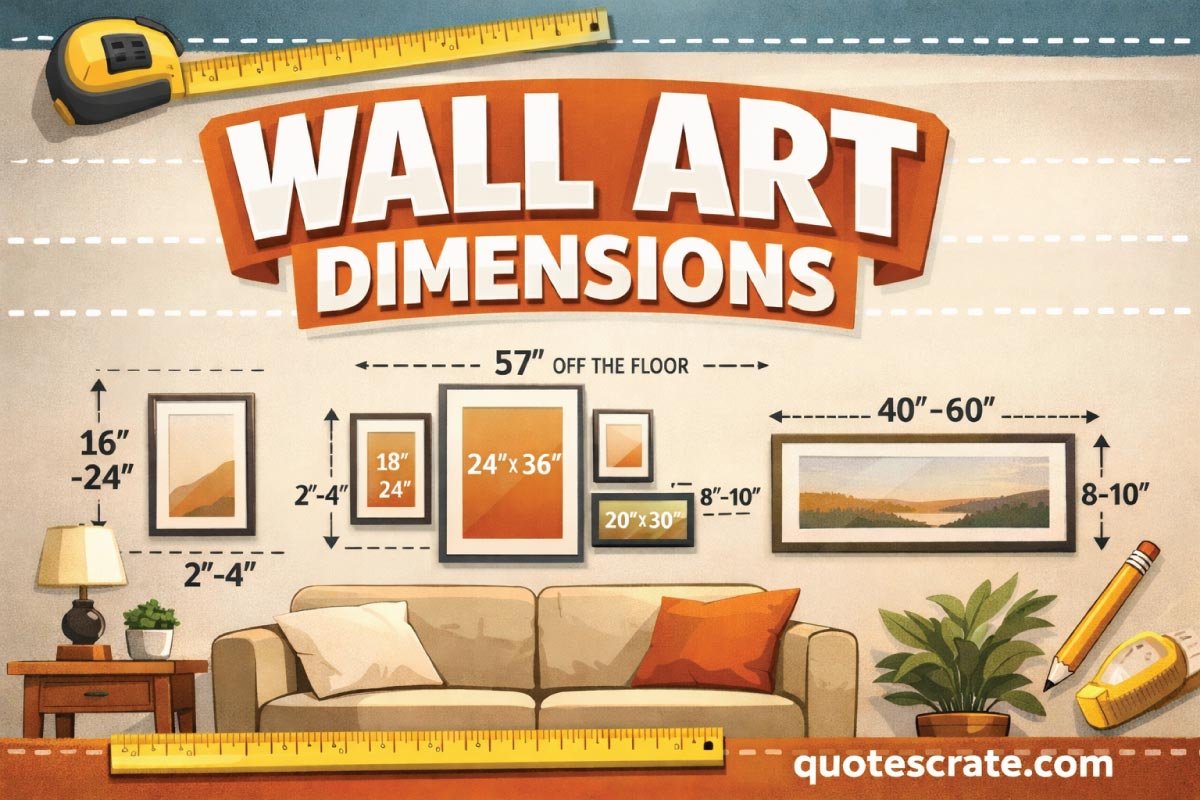
Wall art has the power to completely transform a room. The right piece can make a small space feel larger, add personality to blank walls, and bring balance to your overall décor. However, one of the most common mistakes people make is choosing the wrong wall art dimensions. Too small, and it looks lost. Too large, and it overwhelms the room.
In this complete guide, we’ll break down everything you need to know about wall art dimensions, including standard sizes, how to choose art for different rooms, and expert tips to help you get it right the first time.
Wall Art Made Simple: Size and Layout Tips for Every Space
Imagine walking into a room that instantly inspires you a space where every wall tells a story, every frame sparks joy, and every piece of art feels perfectly placed. Choosing the right wall art isn’t just about decoration; it’s about creating an environment that fuels your creativity, reflects your personality, and lifts your mood every single day.
But here’s the challenge: picking the right size and layout can feel overwhelming. Too small, and your artwork disappears; too large, and it dominates the room in all the wrong ways. That’s why understanding wall art dimensions is a game-changer.
With the right guidance, you can effortlessly balance scale, proportion, and placement to create walls that speak to the heart of your home. Whether you’re curating a gallery wall, filling an empty corner, or designing a bold focal point, knowing the ideal measurements transforms hesitation into confidence.
This guide will empower you with the tips, tricks, and expert insights you need to match art to your walls, harmonize colors and frames, and design layouts that make every glance feel intentional.
By the end, you won’t just be hanging art you’ll be crafting an experience, a visual story that energizes your space and inspires everyone who enters. Get ready to turn your walls into a canvas of possibility.
Why Wall Art Dimensions Matter
-
Create visual balance
-
Complement furniture placement
-
Enhance room flow
-
Avoid clutter or empty-looking walls
When wall art is sized correctly, it feels intentional and polished rather than random or awkward.
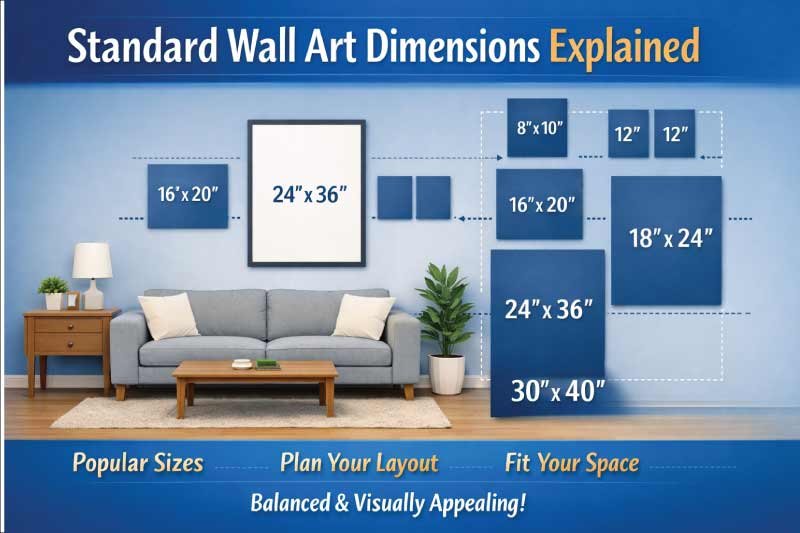
Standard Wall Art Dimensions Explained
Common Wall Art Size Categories
| Wall Art Size | Dimensions (Inches) | Best Use Cases |
|---|---|---|
| Small | 8×10, 11×14, 12×16 | Shelves, gallery walls, small spaces |
| Medium | 16×20, 18×24, 20×30 | Bedrooms, offices, accent walls |
| Large | 24×36, 30×40 | Living rooms, above furniture |
| Extra Large | 40×60, 48×72 | Statement walls, open spaces |
When shopping online, always check if the dimensions listed include the frame or just the artwork itself.
How to Choose the Right Wall Art Dimensions for Each Room
Wall Art Dimensions for Living Rooms
The living room is usually the heart of the home, so selecting the right wall art dimensions is key for balance and style. Above a sofa, artwork should generally span 60–75% of its width. Large canvases, triptychs, or coordinated sets create a striking focal point without overwhelming the space.
Living Room Size Guide
| Furniture Placement | Recommended Art Width |
|---|---|
| Above Sofa | 60–75% of sofa width |
| Empty Accent Wall | 70–80% of wall width |
| Gallery Wall | Flexible, balanced layout |
Bedroom Wall Art Dimensions
Above the Bed
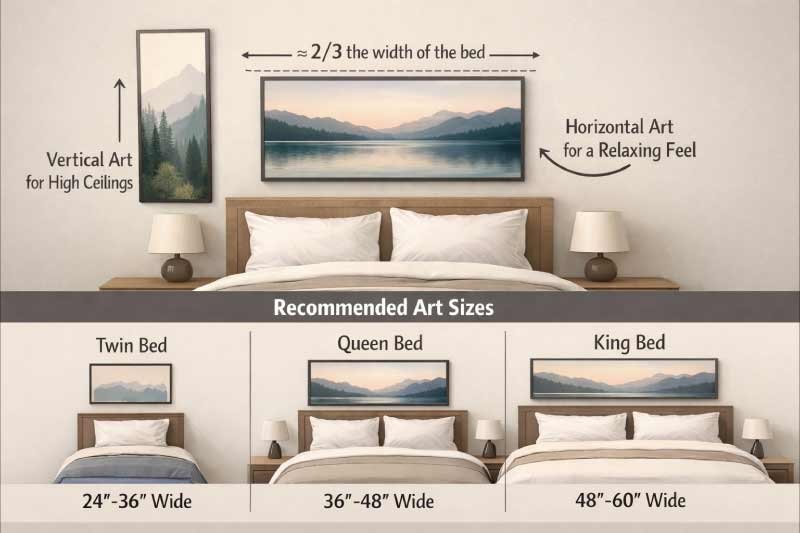
Artwork above the bed should be about two-thirds the width of the bed.
-
Twin bed: 24–36 inches wide
-
Queen bed: 36–48 inches wide
-
King bed: 48–60 inches wide
Vertical wall art works well if your ceilings are high, while horizontal art creates a relaxing feel.
Dining Room Wall Art Dimensions
-
Large single canvas for formal dining areas
-
Medium-sized framed prints for casual dining spaces
-
Avoid art that’s too small—it can feel disconnected
Tip: Leave at least 6–8 inches of space between the art and furniture like buffets or sideboards.
Office and Workspace Wall Art Dimensions
-
Small to medium sizes work best
-
16×20 or 18×24 inches are ideal
-
Gallery walls are great for creative workspaces
Keep art at eye level to maintain comfort and professionalism.
Bathroom Wall Art Dimensions
-
Choose moisture-resistant art
-
Small sizes like 8×10 or 11×14 inches work best
-
Vertical art fits narrow walls well
Avoid oversized pieces that can overwhelm tight spaces.
Gallery Wall Dimensions and Layout Tips
1- Measure the Total Wall Space:
Start by measuring the full width and height of the wall where the gallery will go. Knowing the available space helps you determine how many pieces can fit comfortably and prevents the arrangement from feeling cramped or uneven.
2- Decide on Spacing:
Consistent spacing keeps a gallery wall looking organized. A gap of 2–3 inches between frames is ideal for most layouts, allowing each piece to stand out while still feeling connected to the overall display.
3- Choose a Center Point:
Select a visual center for your gallery wall, often aligned with eye level or the center of nearby furniture. This anchor point helps the entire arrangement feel balanced and intentional as you build outward.
4- Arrange on the Floor Before Hanging:
Lay out all your artwork on the floor first to test different arrangements. This step lets you adjust spacing, proportions, and balance before committing to nail holes, making the final installation smoother and more accurate.
Gallery Wall Size Guide
| Wall Size | Number of Frames | Recommended Frame Sizes |
|---|---|---|
| Small Wall | 3–5 | 8×10, 11×14 |
| Medium Wall | 5–9 | 11×14, 16×20 |
| Large Wall | 9–15+ | Mixed sizes |
Canvas vs Framed Wall Art Dimensions
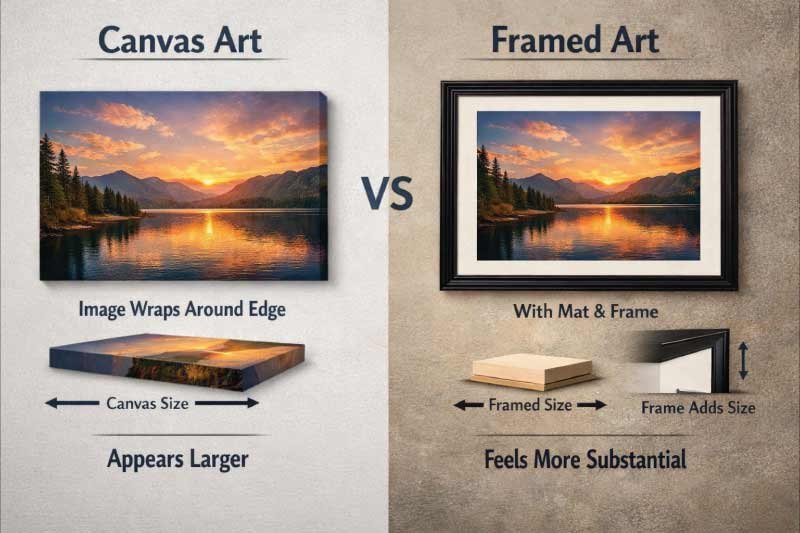
The type of wall art you choose plays a big role in how its dimensions are perceived. Canvas and framed art of the same size can look very different once on the wall. Understanding these visual differences helps you choose the right format for your space and style.
1- Canvas Art:
Canvas art often appears larger than its listed dimensions because it has no outer frame. The image can wrap around the edges, creating a clean, expansive look. This makes canvas ideal for modern or minimalist interiors, and it can usually be chosen slightly smaller than framed art without losing impact.
2- Framed Art:
Framed art carries more visual weight due to the added border around the artwork. Frames increase the overall size and make pieces feel more formal and structured. This style works well in traditional or classic spaces, but it does require extra wall clearance to avoid looking crowded.
Always account for the frame width when measuring.
Height Placement: Getting It Right
Ideal Hanging Height
-
Center of artwork should be 57–60 inches from the floor
-
Above furniture, leave 6–10 inches of space
This keeps art aligned with natural eye level.
Common Wall Art Dimension Mistakes to Avoid
Wall art can elevate a room instantly, but the wrong dimensions can throw everything off. Many decorating issues come down to sizing and placement errors. Knowing the most common wall art mistakes helps you avoid costly missteps and create a balanced, polished look.
1- Choose Art That’s Too Small for the Wall:
Artwork that’s too small can get lost on large walls, so aim for pieces that cover about two-thirds to three-quarters of the wall width for balance.
2- Hanging Art Too High:
Keep the center of your artwork at eye level—roughly 57–60 inches from the floor—to ensure it feels naturally integrated into the room.
3- Ignoring Furniture Proportions:
Artwork should complement the width of furniture beneath it, ideally spanning 60–75% of the piece for a harmonious look.
4- Forgetting Frame Size:
Remember to account for the frame, which can add inches to the overall dimensions and affect spacing on the wall.
5- Not Measuring Before Buying:
Measure your wall and furniture carefully to prevent art from feeling too small, too large, or awkwardly placed.
Avoiding these mistakes instantly improves the look of your space.
Custom Wall Art Dimensions: When Standard Sizes Don’t Work
Custom art is perfect for:
-
Large feature walls
-
Staircases
-
Tall ceilings
-
Unique layouts
While custom art may cost more, it provides a tailored, high-end look.
Tips for Buying Wall Art Online
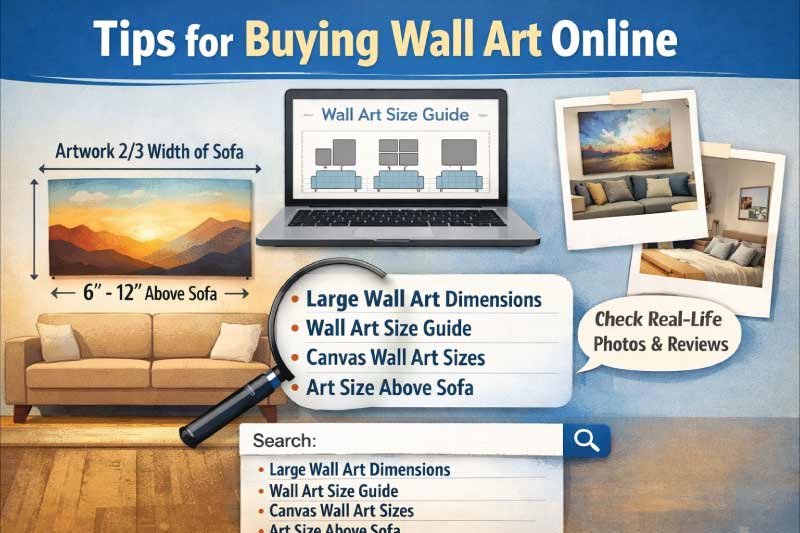
Buying wall art online can be tricky when it comes to choosing the right dimensions. Without seeing the piece in person, size mistakes are common. A little research goes a long way. Using the right search terms, studying size guides, and checking real-life photos can help you confidently select wall art that fits your space perfectly.
-
“Large wall art dimensions”
-
“Wall art size guide”
-
“Canvas wall art sizes”
-
“Art size above sofa”
Always read reviews and look for photos showing the art in real spaces.
Final Thoughts
Wall art dimensions play a crucial role in shaping the overall atmosphere of a room. Choosing the right size helps create harmony, balance, and visual interest, making the space feel intentional and well-designed. Conversely, art that’s too small or too large can throw off proportions and make a room feel awkward or cluttered. By familiarizing yourself with standard sizes, exploring custom options when needed, and considering furniture and wall space, you can select pieces that perfectly complement your home’s layout and style.
Also Read: