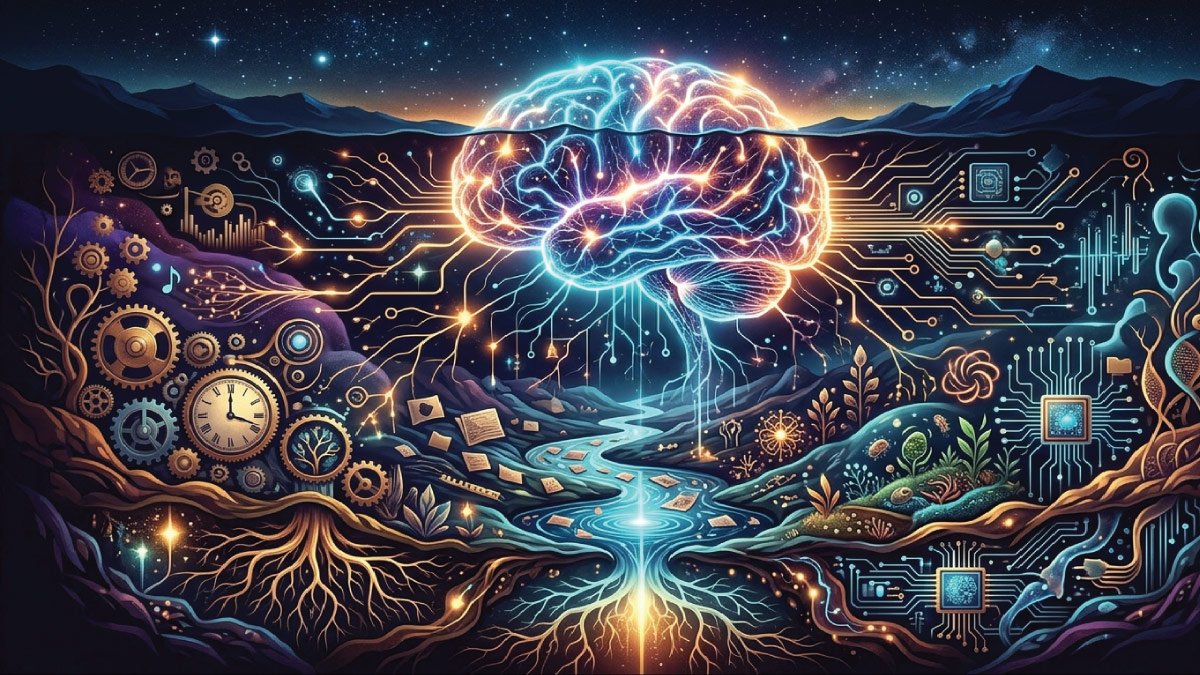
We like to believe we’re in control of our thoughts, actions, and decisions. But the truth is far more fascinating: your brain is constantly working behind the scenes, making choices, adjustments, and predictions without asking for your permission. In fact, a large portion of what you think, feel, and do every day happens automatically.
I didn’t fully appreciate this until I started paying closer attention to my own habits—why I reach for my phone without thinking, why a smell can suddenly trigger a vivid memory, or why my mood shifts before I even know what I’m feeling. The more I learned, the more amazed (and humbled) I became by how powerful and mysterious the brain really is.
Here are 17 incredible things your brain does without you even realizing it.
1. It Filters Out Unnecessary Information
Your brain is constantly receiving far more information than you are consciously aware of at any given moment. To prevent overload, it filters out most sensory input and only lets through what it deems important for survival or attention. This filtering process shapes your perception of reality, often without you realizing it. As a result, your experience of the world is not a complete picture, but a carefully curated version constructed by your brain to keep you functional and focused.
Your awareness is only a small spotlight in a much larger field of sensory data. Everything outside that spotlight is automatically ignored.
This is why you can adapt to loud environments or stop noticing constant sensations over time.
Key Points
The brain filters most sensory input
Attention is highly selective
Filtering prevents sensory overload
Habituation reduces awareness of constant stimuli
Perception is a constructed experience
You only notice changes, not constants
Personal Experience
I noticed this when I moved to a noisy area and struggled at first. The traffic and voices felt overwhelming, but after a few weeks, I barely noticed them. It made me realize how quickly the brain adapts by filtering out what it decides is non-essential.
2. It Predicts the Future (Constantly)
Your brain is not just reacting to the present moment—it is constantly predicting what will happen next. Based on past experiences, patterns, and subtle cues, it generates expectations about future events to help you respond more efficiently. This predictive system allows you to move, speak, and react smoothly in a fast-changing environment. However, most of these predictions happen unconsciously, meaning you experience their results without realizing your brain was actively forecasting outcomes in advance.
Much of what you “see” is actually your brain’s best guess of what is about to happen.
This predictive ability helps with speed but can sometimes lead to errors when assumptions are wrong.
Key Points
The brain continuously predicts outcomes
Predictions are based on past patterns
Helps with faster reactions
Mostly unconscious processing
Errors occur when predictions are wrong
Perception is partly expectation-based
Personal Experience
I noticed this while driving. I often slow down before the car in front even brakes fully, as if I already knew what was coming. Later I realized my brain was picking up subtle cues and predicting the likely outcome before I consciously registered it.
3. It Makes Decisions Before You’re Aware of Them
Many decisions that feel conscious are actually initiated in the brain before you become aware of them. By the time you think you are choosing something, your subconscious has already processed patterns, emotions, and past experiences to lean toward a decision. Conscious awareness often comes after this internal selection has already started. This creates the illusion that decisions are fully deliberate, even though much of the groundwork is done automatically and outside of conscious awareness.
What feels like a sudden choice is often the final step of a process that began earlier in your subconscious mind.
Your “gut feeling” is frequently the result of rapid, hidden pattern recognition.
Key Points
Decisions often start subconsciously
Conscious awareness follows processing
Emotions influence early choices
Gut feelings are pattern-based
Choice is partly automatic
Awareness often explains after the fact
Personal Experience
During interviews or meetings, I sometimes instantly feel comfortable or uneasy with someone before I can explain why. Later, my mind builds reasons for that feeling, but the initial reaction always comes first and feels automatic.
4. It Creates Your Sense of Self
Your sense of identity is not a fixed object but a continuous mental construction created and maintained by your brain. It integrates memories, beliefs, experiences, and emotions into a coherent story that feels like “you.” This self-image is constantly updated as new experiences are added and old ones fade or are reinterpreted. Because of this, identity is fluid rather than static, even though it feels stable and consistent from moment to moment.
The “you” you experience is a narrative your brain continuously writes and edits.
It creates continuity so that your life feels connected, even though your thoughts and feelings are always changing.
Key Points
Identity is a mental construct
Based on memory and experience
Continuously updated over time
Creates a sense of continuity
Self-image is fluid, not fixed
The brain maintains personal narrative
Personal Experience
When I read old journals or messages from years ago, I often feel like I’m looking at a different person. My thoughts, priorities, and beliefs have shifted so much that it’s surprising how different my “past self” feels compared to who I am now.
5. It Protects You from Emotional Overload
The brain has built-in mechanisms to protect you from becoming overwhelmed by intense emotional experiences. When something emotionally extreme happens, it can temporarily delay or suppress the full emotional response to allow you to function in the moment. This protective buffering helps you cope with stress and continue acting when immediate reaction would be too overwhelming. Emotional processing often arrives later, once the brain determines it is safer to fully experience and process the event.
This delayed response is a form of emotional protection, not emotional absence.
It allows you to survive and function during high-stress situations before fully processing what happened.
Key Points
Emotions can be temporarily suppressed
Protection against overwhelm
Helps maintain functionality
Processing may be delayed
Common in stressful situations
Emotions often surface later
Personal Experience
I once received unexpected bad news and felt strangely numb instead of emotional. I didn’t fully react at that moment. Only days later did the emotional impact hit me. At the time, I didn’t understand it, but later I realized my brain had delayed the response so I could keep functioning.
6. It Fills in Visual Gaps
Your visual experience feels continuous and complete, but in reality your brain is constantly filling in missing information. Because the eyes have blind spots and cannot capture every detail, the brain uses context, patterns, and prior knowledge to construct a smooth and coherent image of the world. This process happens instantly and unconsciously, making perception feel effortless. As a result, what you “see” is not purely raw data, but an interpreted version created by your mind.
Your brain prioritizes continuity over accuracy. It would rather give you a stable, complete image than a fragmented or confusing one.
This means your reality is partly constructed rather than directly observed.
Key Points
Vision contains natural blind spots
Brain fills missing visual data
Perception is constructed, not direct
Context shapes what you “see”
Continuity is prioritized over accuracy
Processing happens unconsciously
Personal Experience
Once I learned about blind spots in vision, I started noticing how stable everything still appears despite those gaps. It made me realize how much my brain is quietly working in the background to complete the picture without me ever noticing.
7. It Runs on Autopilot During Habits
Habits are behaviors that your brain automates to save mental energy. When something becomes familiar through repetition, the brain shifts control from conscious decision-making to automatic processing. This allows you to perform routine actions efficiently without needing to think through every step. While this system is useful for conserving effort, it also means that many daily behaviors happen with minimal awareness, making it easy to operate on “autopilot” without actively engaging in the present moment.
Your brain conserves energy by outsourcing repeated actions to automatic systems.
This frees up mental space but can also reduce awareness of what you are doing.
Key Points
Habits are automated behaviors
Repetition builds neural efficiency
Reduces need for conscious thought
Saves mental energy
Can reduce present awareness
Autopilot improves efficiency
Personal Experience
I’ve had moments where I drove a familiar route and suddenly realized I didn’t remember parts of the journey. My brain had handled everything automatically while my thoughts were somewhere else entirely.
8. It Adjusts Your Mood Through Chemistry
Your mood is not only shaped by thoughts and experiences but also by complex chemical processes in the brain. Neurotransmitters and hormones continuously influence how you feel, affecting motivation, energy, and emotional stability. These chemical changes often happen without conscious control, meaning your emotional state can shift due to sleep, diet, stress, or environment. This creates the experience that feelings sometimes arise “out of nowhere,” when in reality they are deeply connected to biological regulation happening beneath awareness.
Your emotional state is partly biological, not just psychological.
Small changes in body and environment can significantly shift how you feel.
Key Points
Mood is influenced by brain chemistry
Neurotransmitters affect emotions
Sleep and stress alter mood states
Emotions can shift without clear reason
Biology plays a major role in feelings
Mental state is physically regulated
Personal Experience
I’ve noticed that when I don’t sleep well, even minor problems feel overwhelming. On good-rest days, the same issues feel manageable. That made me realize how much of my mood is influenced by physical state rather than just mindset.
9. It Scans for Threats Automatically
Your brain is constantly monitoring your environment for potential threats, even when you feel completely safe. This automatic scanning system evolved for survival, helping humans detect danger quickly and respond before conscious thought intervenes. As a result, sudden sounds, movements, or unexpected changes can trigger immediate reactions. This protective mechanism operates continuously in the background, shaping attention and emotional responses without requiring deliberate awareness or conscious effort.
Your brain is always slightly on alert, even during calm moments.
It reacts to potential danger before logic has time to process the situation.
Key Points
Brain constantly scans for danger
Works automatically and unconsciously
Fast reaction system for survival
Loud or sudden stimuli trigger responses
Attention is threat-sensitive
Evolutionary protective mechanism
Personal Experience
I’ve felt this when a sudden loud sound makes me jump before I even understand what caused it. The reaction happens instantly, and only afterward do I realize there was no real danger.
10. It Associates Smells with Memories
Smell is one of the most powerful triggers of memory because it is directly linked to brain regions involved in emotion and recollection. Unlike other senses, scent bypasses several processing stages and connects quickly to memory centers, making recalled experiences feel vivid and emotionally rich. This is why certain smells can instantly bring back detailed memories from years ago without conscious effort, often accompanied by a strong emotional response that feels surprisingly immediate and immersive.
A single scent can unlock entire moments from your past with surprising clarity.
Smell and memory are tightly connected in the brain, creating powerful emotional recall.
Key Points
Smell is strongly linked to memory
Direct connection to emotional centers
Triggers vivid recollections
Bypasses complex processing stages
Evokes strong emotional responses
Memories can feel instant and immersive
Personal Experience
For me, the smell of rain on hot concrete instantly brings back childhood memories of playing outside during evening showers. I don’t have to try to remember—it just happens automatically, with full emotional detail.
11. It Regulates Your Body While You Sleep
Sleep is not a passive state but an active and highly regulated process controlled by the brain. While you rest, your brain coordinates essential functions such as repairing tissues, organizing memories, balancing hormones, and clearing metabolic waste. These processes are critical for both physical health and cognitive performance. Without sufficient sleep, these systems become less efficient, affecting mood, focus, and decision-making. Sleep is therefore one of the most important biological maintenance periods your body experiences.
Your brain shifts from external awareness to internal repair mode during sleep.
What feels like inactivity is actually one of the most biologically productive phases of the day.
Key Points
Sleep supports brain and body repair
Memories are consolidated during rest
Waste removal occurs in the brain
Hormones are regulated overnight
Sleep affects mood and cognition
Rest is biologically essential
Personal Experience
I used to underestimate sleep and treat it as wasted time. But whenever I slept properly, I noticed I could think more clearly, react better, and feel more stable emotionally. It became obvious that sleep was doing important work in the background.
12. It Copies the Emotions of Others
Your brain is naturally tuned to pick up and reflect the emotional states of people around you. Through subtle cues like facial expressions, tone of voice, and body language, you unconsciously mirror emotions, which helps build social connection and empathy. However, this also means emotions can spread quickly within groups, influencing how you feel without direct personal experience. This emotional contagion plays a powerful role in shaping your mood in social environments.
Your emotional state is not fully independent—it is often influenced by the people you interact with.
This mirroring system helps humans connect but also makes moods contagious.
Key Points
Emotions are socially contagious
Brain mirrors facial and vocal cues
Supports empathy and bonding
Group moods influence individuals
Emotional states can shift externally
Awareness helps emotional control
Personal Experience
I’ve noticed that when I spend time with calm, positive people, I naturally feel more relaxed and optimistic. On the other hand, being around constant negativity slowly drains my energy, even without direct conflict or conversation.
13. It Rewrites Memories
Memory is not a fixed recording but a dynamic process that changes each time you recall it. When you remember an event, your brain reconstructs it using fragments of stored information combined with current beliefs and emotions. This means memories can gradually shift over time, becoming less accurate and more aligned with your present perspective. As a result, two people can remember the same event differently, and even the same person can experience changes in recall over time.
Each time you remember something, your brain edits it slightly like a story being rewritten.
This makes memory flexible but also vulnerable to distortion.
Key Points
Memory is reconstructive, not static
Recall modifies stored information
Emotions influence recollection
Memories change over time
Different perspectives create different versions
Accuracy decreases with repeated recall
Personal Experience
I’ve had situations where I was completely sure about how something happened, only to find out others remembered it differently. It made me realize that memory is not a perfect record—it’s more like a story that changes slightly every time it is told.
14. It Controls Hunger and Cravings
Hunger and cravings are not simply signals from the stomach but complex processes regulated by the brain. Hormones, emotional states, habits, and environmental cues all influence what and when you feel like eating. This means cravings can sometimes reflect stress, boredom, or routine rather than actual physical need. The brain uses food not only for energy regulation but also for emotional comfort, which explains why eating behavior is often linked to feelings rather than hunger alone.
Your brain plays a central role in deciding when and what you feel like eating.
Cravings are often emotional or habitual rather than purely biological.
Key Points
Hunger is brain-regulated
Hormones influence appetite
Emotions trigger cravings
Habits shape eating behavior
Cravings are not always physical need
Environment affects food choices
Personal Experience
I’ve noticed that when I’m stressed or mentally tired, I tend to crave sugary or comfort foods even if I’m not truly hungry. Over time, I realized it wasn’t my stomach demanding food—it was my brain seeking relief.
15. It Keeps You Socially Aligned
Your brain is constantly monitoring social environments to ensure you behave in ways that align with group expectations. It tracks subtle cues such as tone, timing, facial expressions, and reactions to help you adjust your behavior in real time. This unconscious process helps maintain social harmony and belonging. However, it can also make you overly self-conscious, especially after saying something that feels slightly inappropriate or out of place, triggering internal reflection and adjustment.
Social awareness is continuously running in the background of your mind, shaping how you speak and behave.
This system helps you fit in but can also create overthinking in social situations.
Key Points
Brain tracks social cues automatically
Helps maintain group belonging
Adjusts behavior in real time
Encourages social conformity
Can increase self-consciousness
Supports communication and bonding
Personal Experience
I’ve experienced moments where I said something slightly awkward and immediately felt it—even before anyone reacted. My mind quickly replayed the moment, as if trying to correct itself for future interactions.
16. It Conserves Energy by Taking Shortcuts
Your brain is constantly balancing performance and energy efficiency, and one of its main strategies is to use mental shortcuts. These shortcuts, also known as heuristics, allow you to make quick decisions without fully analyzing every detail. While this helps you function efficiently in daily life, it can also lead to oversimplifications and errors in judgment. The brain prioritizes speed and energy conservation over perfect accuracy, especially in routine or familiar situations where quick responses are usually sufficient.
Instead of carefully analyzing every situation, your brain relies on patterns and assumptions that worked in the past.
This makes life faster and easier, but not always more accurate.
Key Points
Brain uses mental shortcuts (heuristics)
Saves energy and cognitive effort
Improves speed of decision-making
Can lead to oversimplification
Accuracy is sometimes sacrificed for efficiency
Patterns from past guide current thinking
Personal Experience
I often notice myself making quick judgments about situations or people, only to realize later that I missed important details. Even when I know about these shortcuts, they still happen automatically. Awareness helps me correct them afterward, but it doesn’t stop the initial instinct.
17. It Keeps You Alive Without Asking
Many of the most important functions in your body are controlled automatically by your brain without any conscious effort or awareness. Processes such as breathing, heartbeat regulation, digestion, and temperature control are continuously managed in the background to keep you alive and stable. This automatic regulation allows you to focus on higher-level thinking and daily activities without worrying about basic survival functions. It is one of the most fundamental ways the brain maintains life effortlessly every second.
Your survival systems are running constantly, even when you are not aware of them.
The brain manages these processes automatically so conscious thought is free for other tasks.
Key Points
Vital functions run automatically
Includes breathing and heartbeat
Controlled by brainstem systems
Frees mind for higher thinking
Operates continuously without awareness
Essential for survival
Personal Experience
Sometimes when I consciously focus on my breathing, I become aware of how effortlessly it has been happening all my life. It feels almost strange that something so essential runs perfectly in the background without me ever needing to control it.
Final Thoughts: You Are Not Your Brain—But You Live With It
Learning about these unconscious processes changed how I see myself. Instead of blaming myself for every thought or reaction, I’ve learned to observe with curiosity. My brain isn’t me—it’s my lifelong partner, doing its best to keep me alive, connected, and functioning.
The more you understand what your brain does automatically, the more compassion you gain for yourself and others. And perhaps most importantly, you realize just how extraordinary it is that so much is happening within you—without you ever having to ask.
Views: 21