
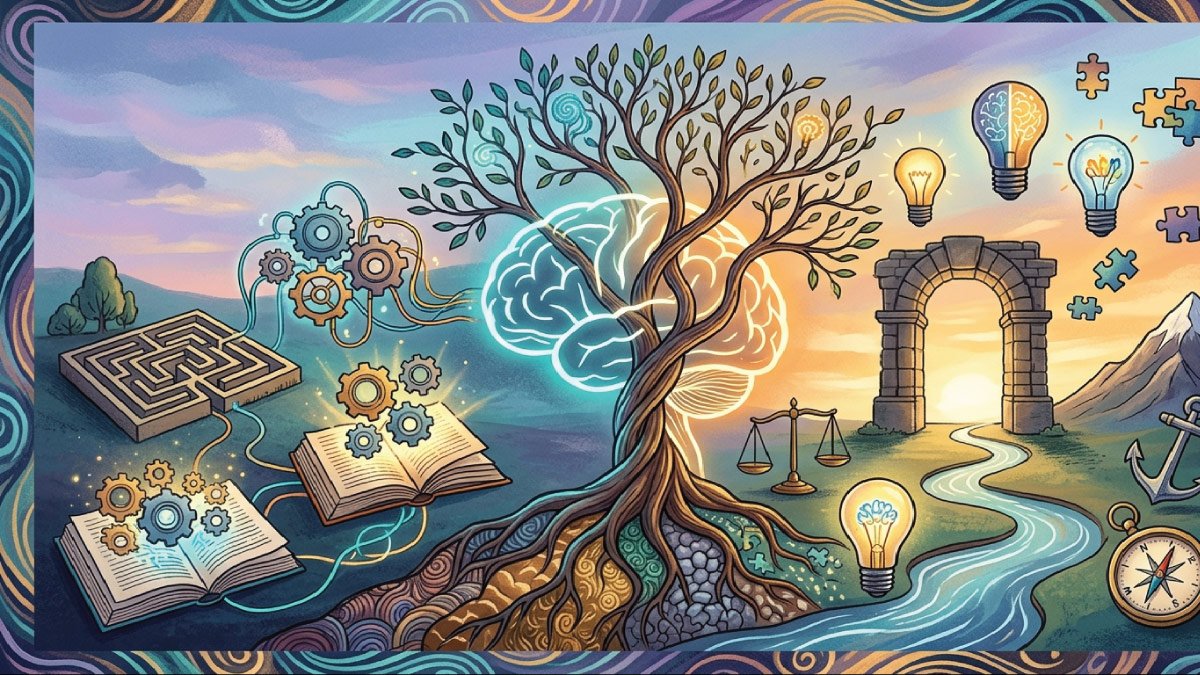
Human behavior is far more complex than it appears on the surface. Many of the struggles, emotions, and patterns we experience every day are deeply rooted in psychology—often without us realizing it. Understanding these psychological truths doesn’t just satisfy curiosity; it helps us live better, relate better, and grow emotionally.Here are 15 deep psychology facts about life that may change how you see yourself and others.
5. Overthinking Is a Sign of Intelligence — But Also Anxiety
Overthinking is often misunderstood as simply “thinking too much,” but in reality, it can come from two very different psychological sources. On one hand, highly intelligent and creative individuals tend to analyze situations deeply, exploring multiple outcomes, patterns, and hidden meanings. This kind of thinking can be productive and even beneficial. However, when the mind becomes stuck in repetitive loops of worry, doubt, and “what if” scenarios, it may shift from productive analysis into anxiety-driven rumination. The key difference lies in whether the thinking leads to clarity or mental exhaustion.
Key points:
Deep thinkers naturally explore multiple possibilities before deciding
Intelligence often increases awareness of potential risks and outcomes
Overthinking becomes harmful when it turns repetitive and uncontrollable
Anxiety-driven thoughts usually focus on worst-case scenarios
Productive thinking leads to solutions, while anxiety leads to paralysis
Awareness of thought patterns helps separate logic from fear
Personal experience:
Many people notice that when they are under pressure, their mind starts replaying situations again and again. Initially, it feels like problem-solving, but later it becomes draining. Learning to pause and ask “Is this useful thinking or just worry?” often helps break the cycle.
6. Your Brain Is More Negative by Default
The human brain is naturally wired with a negativity bias, meaning it pays more attention to threats, mistakes, and negative experiences than positive ones. This is not a flaw—it is an ancient survival mechanism that helped early humans stay alert to danger. However, in modern life, where physical threats are rare, this same system can create unnecessary stress, anxiety, and pessimism. As a result, people may focus more on what is wrong rather than what is going well, unless they consciously train their mind toward gratitude and balanced thinking.
Key points:
The brain prioritizes negative information for survival reasons
Negative experiences are stored more strongly than positive ones
This bias can increase stress and anxiety in daily life
Modern environments trigger the system without real danger
Gratitude practices help balance emotional perception
Awareness is the first step to reducing negativity bias
Personal experience:
It is common to remember criticism more than praise, even when both are equal in number. Over time, this can distort self-image. Practicing reflection on positive moments at the end of the day can slowly rewire this habit and improve emotional balance.
7. People Treat You the Way You Teach Them to
How others treat you is often influenced by the boundaries you set and the behavior you consistently accept. When a person repeatedly tolerates disrespect, overuse of their time, or emotional neglect, they may unintentionally signal that such treatment is acceptable. This does not mean blame lies with the individual—it reflects a lack of communicated boundaries. Healthy relationships are built when people clearly express their limits and reinforce them consistently, shaping mutual respect over time.
Key points:
Boundaries communicate what behavior is acceptable
Repeated tolerance reinforces how others treat you
Lack of limits can lead to emotional exhaustion
Respect grows when expectations are clear and consistent
Assertiveness helps improve relationship quality
Teaching others how to treat you starts with self-respect
Personal experience:
Many people realize too late that saying “yes” too often leads to being taken for granted. Once they begin setting small but firm boundaries, relationships often shift—some improve through respect, while others naturally fade away.
8. Comfort Zones Are Mentally Addictive
The comfort zone is not just a lifestyle preference—it is a psychological state that the brain actively tries to maintain. Humans are naturally drawn to familiarity because it reduces uncertainty and perceived risk. Even when a situation is unhealthy, such as a toxic job or unfulfilling relationship, the brain may still prefer it because it is predictable. Growth, on the other hand, feels uncomfortable because it introduces uncertainty, forcing the brain to adapt. This is why change often feels harder than staying in a bad situation.
Key points:
The brain prefers familiarity over uncertainty
Comfort zones reduce mental effort and perceived risk
Even unhealthy situations can feel “safe” due to predictability
Growth requires adapting to unfamiliar conditions
Discomfort is often a sign of development
Change feels threatening even when it is beneficial
Personal experience:
People often stay in situations that no longer serve them simply because they are used to them. The moment they step outside their comfort zone, fear increases—but so does growth. With time, what once felt uncomfortable starts becoming normal and empowering.
9. Being Busy Can Be a Form of Emotional Avoidance
Constant busyness is often praised in modern life, but psychologically it can sometimes function as a defense mechanism. Instead of being purely productive, people may keep themselves occupied to avoid uncomfortable emotions, unresolved trauma, or difficult thoughts. When the mind is constantly engaged, there is little space for self-reflection. However, when life slows down, suppressed feelings and questions often surface, which is why stillness can feel uncomfortable for many people. True balance comes from understanding whether your busyness is purposeful or simply a distraction from inner discomfort.
Key points:
Busyness can sometimes mask emotional discomfort
Overloading schedules reduces time for self-reflection
Avoidance behavior is often unconscious
Slowing down can bring suppressed emotions to the surface
Productive work is intentional, not escapist
Awareness helps distinguish growth from distraction
Personal experience:
Many people notice that when they finally take a break after long periods of activity, they suddenly feel restless or uneasy. This is often because emotions that were ignored start to surface. Learning to sit with these feelings, instead of immediately distracting yourself, can lead to better emotional clarity over time.
10. You Remember Negative Moments More Vividly Than Positive Ones
Human memory is not balanced—it is influenced by the brain’s negativity bias. This means that painful, embarrassing, or emotionally charged experiences are often stored more strongly than neutral or positive ones. As a result, a single hurtful comment can feel more impactful than multiple compliments. This tendency once helped humans survive danger, but in modern life it can distort self-perception and emotional well-being. Being aware of this bias allows you to consciously reinforce positive experiences so they are not overshadowed by negative ones.
Key points:
Negative experiences are encoded more strongly in memory
One criticism can outweigh many positive comments
Emotional intensity increases memory retention
This bias can distort self-esteem over time
Conscious reflection helps balance memory perception
Gratitude practices strengthen positive recall
Personal experience:
It’s common for people to remember a single embarrassing moment from years ago but forget many positive interactions. Over time, this can affect confidence. Actively recalling good moments—like achievements or kind words—can help rewire this imbalance.
11. Loneliness Can Exist Even Around People
Loneliness is not just about physical isolation—it is primarily about emotional disconnection. A person can be surrounded by friends, family, or a partner and still feel deeply alone if they do not feel understood, seen, or emotionally safe. Psychological research shows that emotional loneliness can be more painful than being physically alone because it creates a sense of invisibility. True connection requires more than presence; it requires empathy, trust, and emotional availability.
Key points:
Loneliness is emotional, not just physical
You can feel isolated even in social environments
Lack of understanding increases emotional distance
Emotional loneliness impacts mental health strongly
Deep connection requires empathy and vulnerability
Quality of relationships matters more than quantity
Personal experience:
Many people experience times where they are surrounded by others but still feel disconnected. This often happens when conversations stay superficial or when emotions are not openly shared. Meaningful connection usually begins when someone feels safe enough to be honest about how they feel.
12. Your Childhood Shapes Your Adult Relationships
Early childhood experiences play a major role in shaping how individuals perceive love, trust, and emotional safety. The brain learns attachment patterns from caregivers, which later influence how we behave in adult relationships. For example, someone who experienced inconsistency may struggle with trust, while someone who lacked emotional validation may seek approval from others. These patterns are not fixed destiny, but they often operate unconsciously. Understanding them allows a person to break repetitive cycles and build healthier relationships.
Key points:
Childhood experiences form attachment patterns
Early relationships shape emotional expectations
Unresolved patterns often repeat in adulthood
Trust and intimacy are influenced by early care
Awareness helps break unhealthy cycles
Healing is about understanding, not blaming
Personal experience:
Many people only realize later in life that they are repeating familiar relationship patterns without knowing why. Once they understand their emotional “blueprint,” they can start making conscious choices instead of reacting automatically. This awareness often becomes the first step toward healthier emotional connections.
Final Thoughts
Psychology teaches us that much of life happens beneath the surface—inside thoughts we don’t question and habits we don’t notice. The more you understand how your mind works, the more power you gain over your reactions, emotions, and choices.
You don’t need to be perfect. You just need to be aware.
And sometimes, one psychological truth at the right moment can change the direction of your life.